The current landscape of the mobile market presents a fascinating study in contrasts for Samsung. While the South Korean giant continues to dominate global conversations, its latest budget offering in the US, the Galaxy A17 5G, suggests a strategy of safe iteration rather than bold reinvention. Meanwhile, reports surfacing regarding the distant Galaxy S27 Ultra indicate that the company is saving its true engineering prowess for future battles at the premium tier, particularly in response to looming competition from Apple.
A Budget Heavyweight with Compromises
In the strictly competitive arena of dirt-cheap smartphones within the United States, consumers are essentially left to choose between Samsung’s Galaxy A series and the Moto G family. The newly launched Galaxy A17 5G arrives as the $200 contender in this segment. While it does not bring any radical upgrades to the table, it manages to secure its position with a few distinct advantages. Most notably, the device features a beautiful 6.7-inch Super AMOLED screen—a luxury often absent at this price point—alongside a decent storage capacity and a commendable pledge of six years of software updates.
However, a closer inspection of the specifications reveals why the device has received a PhoneArena rating of 5.6, which is statistically 1.8% worse than the average for its price class. The performance is driven by an Exynos 1330 chipset, which struggles to outpace rivals. When pitted against the Motorola Moto G Power (2026), the A17’s shortcomings become apparent. The Motorola handset offers a smoother 120Hz IPS LCD panel compared to the A17’s 90Hz refresh rate, and it packs a larger 5,200 mAh battery versus Samsung’s standard 5,000 mAh unit. Furthermore, while the Galaxy A17 supports 25W wired charging, it lacks the wireless charging capabilities found in its Motorola counterpart, which supports 15W wireless top-ups.
Camera Capabilities and Market Position
Despite these deficits, the A17 5G attempts to redeem itself in the photography department. It houses a 50 MP main camera equipped with Optical Image Stabilization (OIS), a feature that is crucial for low-light clarity. The sensor setup is completed by a modest 5 MP ultra-wide lens and a 2 MP macro shooter. Yet, the overall package feels like a heavy compromise. The device scores significantly lower in “Performance Heavy” metrics compared to the class average, suggesting that while it is a strong budget phone, it comes with the significant catch of mediocre processing power in an increasingly demanding app environment.
Reviving Forgotten Tech for the S27 Ultra
While the budget sector sees incremental updates, industry insiders are abuzz with developments regarding Samsung’s future flagship roadmap. Moving away from the entry-level specifications of the A series, reports from South Korea suggest that Samsung is planning a remarkable comeback of a camera feature not seen since the Galaxy S9 and S10 era. The Galaxy S27 Ultra is expected to reintroduce a variable aperture camera system, a move that indicates a significant shift in mobile photography strategy.
According to industry sources, suppliers such as Samsung Electro-Mechanics and MCNEX are already engaged in producing test samples for this technology. Unlike the earlier iterations which offered only two fixed aperture stops, this new system is anticipated to be far more advanced. The expectation is for a “stepless” or continuously variable aperture, similar to technology previously utilized by Huawei in their flagships. This advancement would grant users precise control over light intake and depth of field, allowing for authentic optical background blur in portraits rather than relying solely on software algorithms.
The Apple Factor Driving Innovation
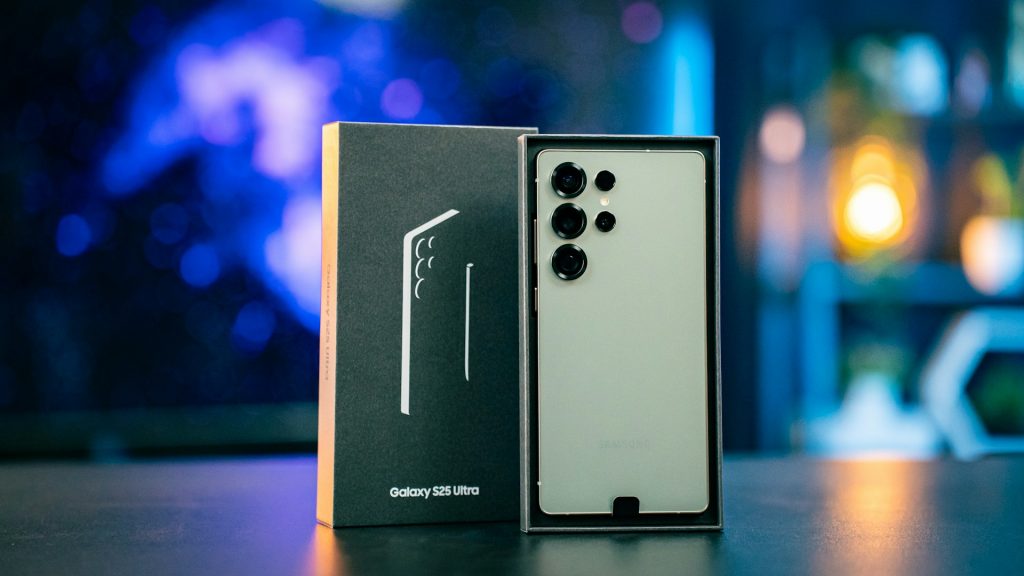
This strategic pivot appears to be reactionary rather than purely experimental. Currently, models like the Galaxy S25 Ultra utilize a “virtual variable aperture” in Pro Mode, which is merely a digital simulation. The move to physical hardware for the S27 Ultra is widely interpreted as a direct response to rumors concerning the iPhone 18 Pro. Speculation is rife that Apple intends to introduce similar variable aperture technology in its 2027 generation.
It is a well-observed trend that Samsung often accelerates the integration of specific features once a competitor like Apple threatens to adopt them. By moving to implement a physical mechanism that avoids the artifacts common in software solutions, Samsung aims to elevate its creative potential to the level of professional cameras, ensuring it does not lose ground in the perennial war for flagship dominance.